

MTST Brasil organized the "Solidarity Kitchens" initiative to build 26 solidarity kitchens in various urban peripheries across Brazil. At least one Solidarity Kitchen was created in the periphery of each of the following states: Roraima, Ceará, Pernambuco, Alagoas, Sergipe, Goiás, Minas Gerais, Rio de Janeiro, Rio Grande do Sul; two in the Federal District; four in the peripheries of São Paulo; and one in the ABC Paulista region.
The Solidarity Kitchens operated daily, distributing free lunches to families in urban peripheries across the country. Organizers stated that the main goal of the mobilization was to ensure that all families in the peripheries have access to healthy and nutritious food. During a time of pandemic and crisis, the distribution of ready-made meals directly benefits women, children, and the elderly.
The goal set for the initiative was to produce and distribute 32,000 meals per month, considering the 26 Solidarity Kitchens that operated jointly during the first semester of the action.

In 2021, CUFA resumed fundraising to benefit mothers in favelas with basic food baskets and food vouchers. The campaign was restarted after they noticed the effects of the second wave of Covid-19 and a 90% drop in CUFA's donations. In addition to food basket donations, CUFA also offered free internet access to several families through the donation of SIM cards with the "Mães da Favela ON" (Mothers of the Favela ON) project.

The research "Pandemic in the Favela - the reality of 14 million favela residents in the fight against the new coronavirus," conducted by CUFA and the Locomotiva Institute, shows the perception of residents of the peripheries regarding the evolution of the pandemic. The research shows that more than 50% of people living in urban peripheries believe that the pandemic is only halfway through; and that more than 80% are living with lower incomes than they had before the pandemic.
Várias associações e movimentos ligadas à luta por moradia e reforma urbana lançaram um monitoramento para dar visibilidade às omissões do poder público no combate à Covid-19 nas periferias. O monitoramento é feito em todo o país, através de questionários que estão sendo aplicados em cada comunidade ou grupo específico.
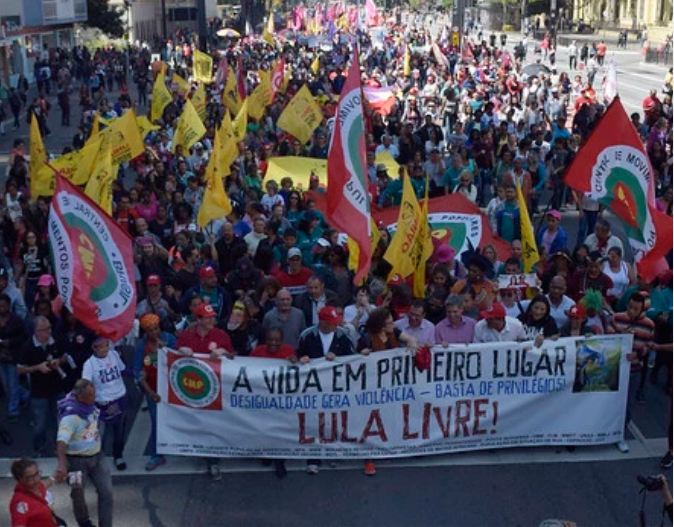
On March 23, 2020, a group of national popular movements fighting for the right to the city released the document "In Defense of the People, Democracy, the Rule of Law and in the fight against COVID-19". In it, they present a set of demands to confront the pandemic, from the perspective of guaranteeing rights and preserving life.

The organization UNEAfro and 12 other partners, including support networks for quilombola communities and the Franciscan Solidarity Service, distributed basic food baskets and hygiene kits in the outskirts of cities and quilombos. They also fought for a guaranteed minimum income for teachers, students, and coordinators of preparatory courses for university entrance exams. Detailed information on the campaign's stages, an accounting of the funds raised, and access to the online fundraising campaign can be found on the campaign's website.
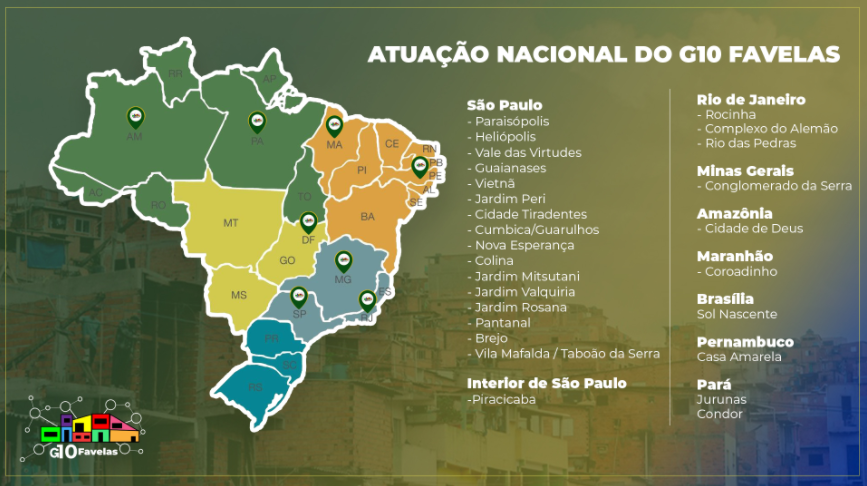
The G10 of the Favelas defines itself as "a bloc of Leaders and Social Impact Entrepreneurs from the Favelas," operating at a national level (see map to the side). On its website and social media, they present the actions developed to combat the pandemic.

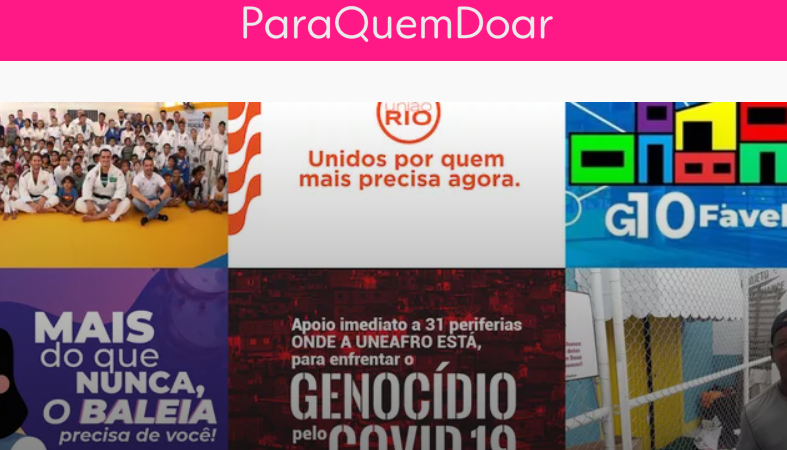
O site Para Quem Doar reúne várias iniciativas pelo Brasil todo para facilitar que doadores encontrem iniciativas, conheçam o que fazem e doem. A página está dividida por regiões do país e também é possível selecionar por ordem alfabética.
In a manifesto signed by dozens of groups from across the country in March 2020, activist media collectives working in the peripheries declared: “We, peripheral communicators from various parts of the country, are joining efforts to collaborate with accurate information that truly reaches our people. We need to know how to inform... From us to our people!” More information on the communicators' collective website.

The MTST (Homeless Workers' Movement) developed several actions to combat the coronavirus in the peripheries, ranging from legal and health guidance to the distribution of donations. One of these was raising donations through an online crowdfunding campaign. To learn more about the actions promoted, visit the Movement's page.
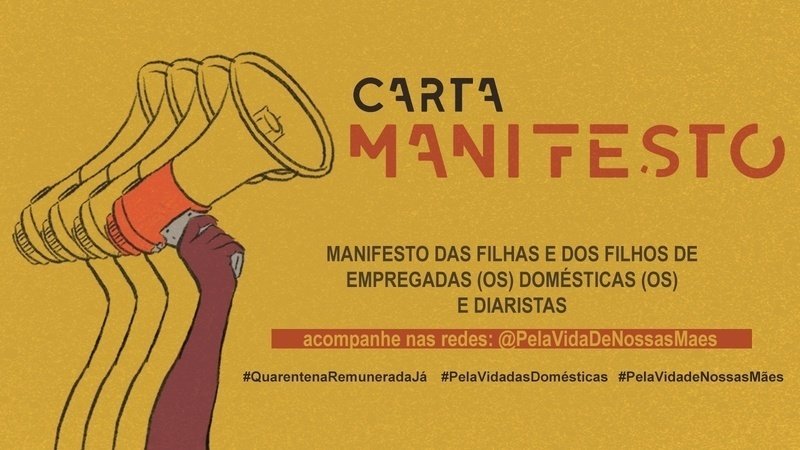
Children of domestic workers have launched the letter "For the lives of our mothers," addressed not only to the authorities but to all of civil society: "Upon observing that our relatives who are domestic workers and day laborers continue to work normally, we emphasize the urgency of complying with the quarantine stipulated by the authorities and demand paid leave." To access the content of the Manifesto Letter, click on the image or the title.

The National Forum for Urban Reform, in partnership with the European Union, launched a Call for Proposals for Local Support Initiatives in the Peripheries. The objective was to enable local forums and networks to carry out actions in the emergency response and prevention of Covid-19, related to the achievement of the Sustainable Development Goals (SDGs). Ten organizations were selected, and each initiative received between R$6,000 and R$9,000. For more information, access the full call for proposals on the website.

The Emancipa network, comprised of community-based preparatory courses located in urban peripheries across various Brazilian states, held open online courses on the COVID-19 pandemic situation for these communities. The classes took place between May 5th and July 7th, 2020.
“Nós, mulheres da periferia” (We, women of the periphery), an independent journalistic collective formed by journalists living in different peripheral regions of the city of São Paulo, engaged in the fight against COVID-19. The collective's website hosts a variety of analyses that highlight how the pandemic unequally affects the periphery, such as the risks of exclusion from distance learning, the limits of access to cultural goods, the use of public transport, and a special series on Environmental Racism: Indigenous and Quilombola women protecting their peoples against COVID-19.

Brasilândia was one of the districts in São Paulo most affected by the pandemic. Since April 2020, local residents have created a network of civil society actors that has expanded to include government actors: "Initially led by local leaders, today it works in conjunction with representatives from Health, Social Assistance, Public Security, Culture, Education and other areas of public policy. Any person or organization can participate in this collective. This is a time for unity and solidarity." See more about the Network on their Facebook page.


Four young people from Rocinha, in Rio's South Zone, who are enthusiastic about technology and computing, created the Opina Rocinha project with the aim of capturing the perception of favela residents about the pandemic. The panel provides information about the situation in which favela residents find themselves amidst the coronavirus outbreak. The objective is to provide data on the conditions of the favelas, including with the aim of enabling public policies that truly serve and assist these people.

#pratodascomunidades (Plate for all communities) is an initiative of the NGO Voz das Comunidades (Voice of the Communities), created to provide ready-made meals to those in need, as well as generating jobs in the community. As the campaign states, "A basic food basket may sometimes not be enough to help. There are families without gas, water, or electricity to cook, needing a plate of food.".

Favela Sem Corona is an initiative to purchase and distribute free rapid COVID-19 tests and protective equipment in the Rocinha favela, which has become something more: a preventive communication project as well as a community tool to monitor the evolution of the disease through a survey created to select beneficiaries.

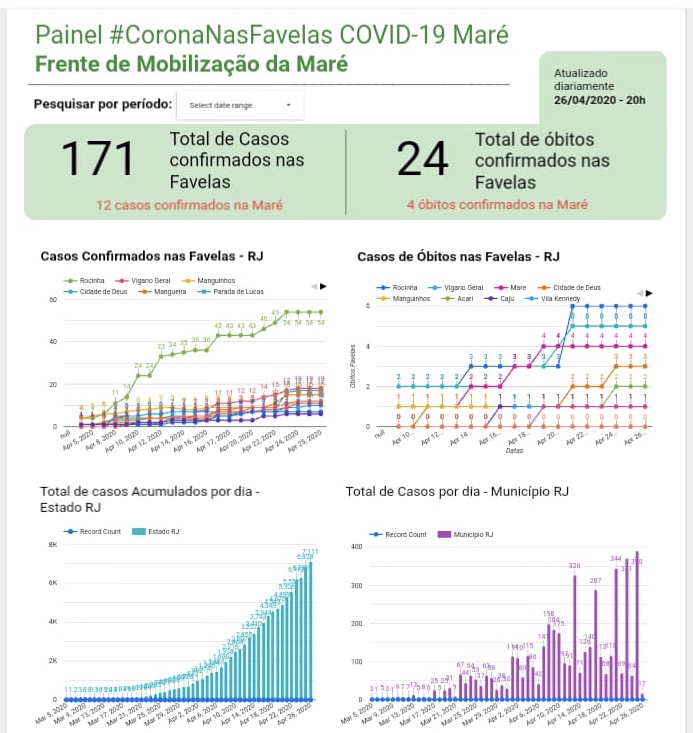
The Maré Mobilization Front, aware of the difficulties with the underreporting of data provided by the government, took the initiative to create a dashboard of Covid-19 cases, which was updated daily with the number of confirmed cases and deaths in the favelas of Rio de Janeiro.

With the help of several partners, Movimenta Caxias distributed basic food baskets, hygiene kits, and organic food to the most vulnerable in Duque de Caxias and the Baixada Fluminense region. The Movement's Facebook page offers information about the initiatives, promoted discussions with experts on various topics, and was also used to provide accountability on how the money raised is being used. In addition, bank details for making donations can be found there.

The Community Image Association, from Belo Horizonte, launched the platform “Periferia Viva: Força-Tarefa Covid-19” (Living Periphery: Covid-19 Task Force), an initiative aimed at bringing together “campaigns, demands and initiatives from those who live in the peripheries, villages, slums and favelas of Belo Horizonte, Greater Belo Horizonte and the interior of Minas Gerais”. The website provides access to a map of the actions that have registered with the initiative.

The research group Social Practices in Urban Space (Praxis) of the School of Architecture of the Federal University of Minas Gerais and the Municipal Department of Urban Policy of Belo Horizonte launched a mapping of initiatives to combat Covid-19 in slums and occupations in the Metropolitan Region. from the mining capital.
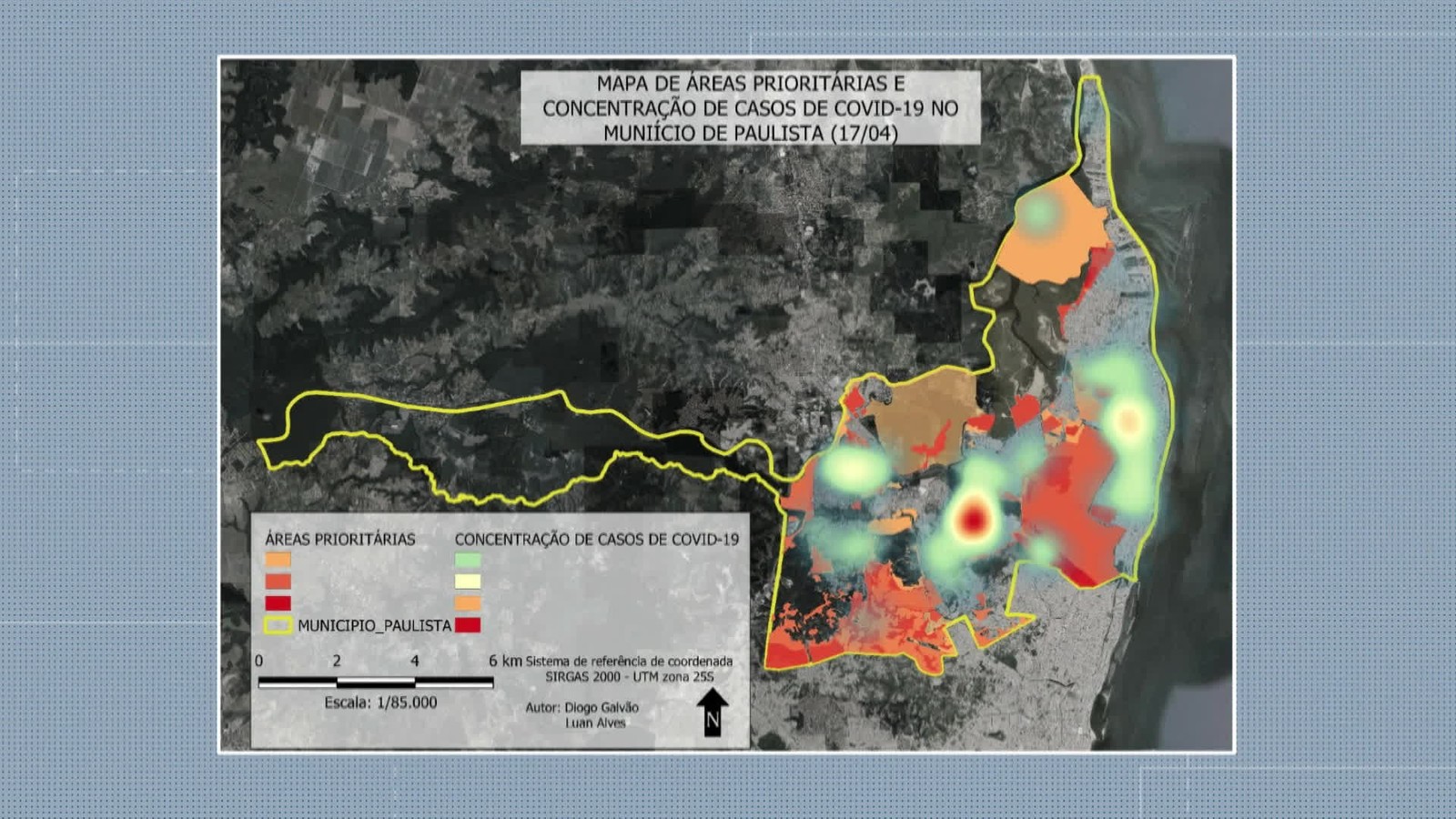
The Paulista Popular Collectives Network (COPPA), formed by various groups from the peripheries of the Recife Metropolitan Region, joined other civil society organizations and professionals to develop a mapping of the areas of greatest socio-spatial vulnerability in the municipality of Paulista-PE. Based on the intersection of 11 indicators (which take into account variables such as age, gender, and race, among others), the Atlas mapped the areas of least and greatest vulnerability in the territory. The research also collected data on official cases of virus contamination and showed that these were concentrated in the most densely populated areas until mid-April. The Atlas can be accessed here.

The Recife Struggle Network is formed by social movements, non-governmental organizations, collectives, and individuals whose objective is to fight for a more just and democratic Recife. During the pandemic, they organized themselves to confront Covid-19 and raise awareness among populations in various communities of Recife.

The organization Marco Zero, which aims to "improve public debate by promoting investigative and independent journalism," has launched the Map of Popular Communication in Greater Recife. The idea is to increase the visibility of narratives from the peripheries, in the context of the fight against the pandemic. To participate in the mapping, you can access the form on the website.

The People's Committee in Defense of the People and Against the Coronavirus is a broad, non-partisan space, formed by various Social Movements, Unions, Associations, Non-Governmental Organizations, Trade Union Federations and all people willing to fight for life and build concrete and unified actions, through solidarity in the fight against the Coronavirus in the municipality of Porto Alegre and RS.

The Libertarian Athenaeum Group "The Battle of Várzea" launched the campaign "Solidarity is more than just words." On its Facebook page, the group compiled a list of organizations and ways to donate to impoverished communities in Rio Grande do Sul.

The Limoeiro Community Group Association launched the campaign "Solidarity is Our Weapon" as a way to support families economically affected by the pandemic. The Association's page contains all the information about fundraising and ways to help.
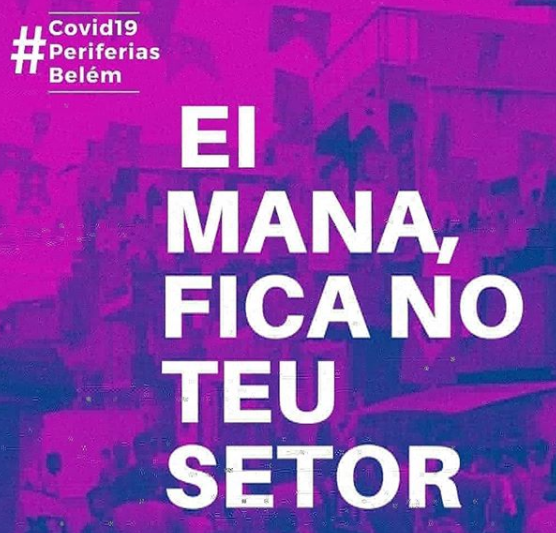
#Covid19PeriferiasBelém is a network of activists/popular communication collectives from the outskirts of Belém-PA, which seeks to disseminate information about the coronavirus. The initiative's Instagram account is at this link.
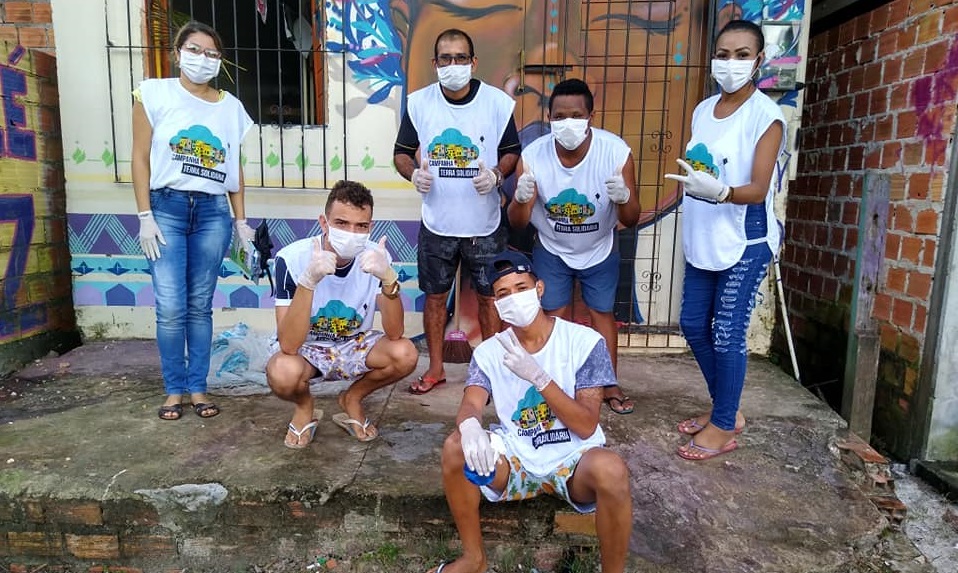
The Tela Firme collective carried out a campaign to collect basic food baskets and hygiene and cleaning supplies for families most economically affected by the social isolation resulting from the coronavirus pandemic. The campaign, called Terra Solidária (Solidarity Land), also donated fabric masks to market vendors in the Terra Firme neighborhood of Belém, where the collective operates. Visit the website for more information.

Periferia em Foco, a grassroots communication collective focused on the peripheries of Greater Belém, Pará, held several live streams on its Facebook page to discuss the impacts of the pandemic on various areas. Information is available on the initiative's social media channels.
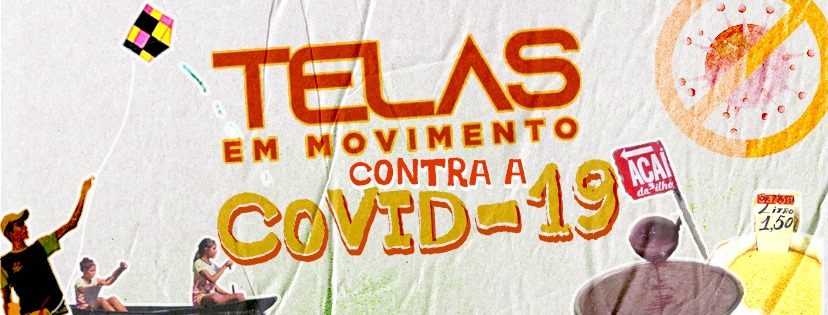
O projeto Telas em Movimento nasceu com o objetivo de democratizar o acesso ao cinema, principalmente nas periferias da Amazônia. Diante da pandemia, o projeto resolveu se reformular para auxiliar no combate à Covid-19 e ajudar famílias em situação de vulnerabilidade nas periferias de Belém. Mais informações podem ser acessadas pelo Facebook do projeto.
In Belém, Pará, the “Committee of Solidarity with Students and Mothers in Social Vulnerability – I Want to Be Able to Stay Home!” is being built by the hands of many activists from the student, union, and feminist movements. The initiative was conceived by the movements @afrontepa and @resistenciafeministapa, but with the intention of being much bigger! The campaign's objective is to join the various campaigns taking place in the metropolitan region and to work in partnership with various entities and social movements in the State. Click here to access the project's Instagram.

The Dividir Project has been carrying out actions in the Federal District since the beginning of the pandemic in 2020. With the second wave of Covid and the renewed closure of non-essential services in 2021, the homeless population – the project's target – was greatly impacted, as there were no longer people making donations or leaving food or other contributions. Therefore, the Dividir Project reinforced its crowdfunding campaign to support these people so that they can have at least one healthy meal a day. Source: Dividir Project, via WhatsApp.
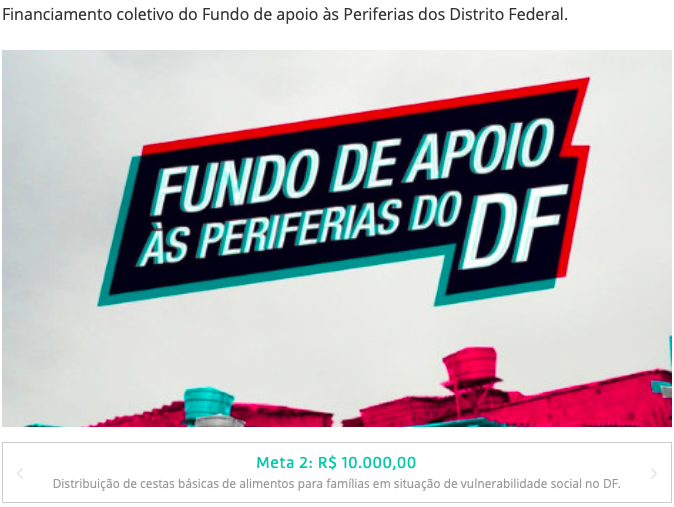
O Fundo de Apoio às Periferias, realizado pela RUAS, contribuiu com milhares de pessoas em 2020, e, sabendo da urgente necessidade de seguir contribuindo no momento mais grave da pandemia, também retomou as arrecadações na segunda onda de Covid-19.

A ASSEVOPA é uma associação voltada para o ensino da prática esportiva de vôlei em Palmas-TO. Durante a pandemia de COVID-19, a associação se organizou com parcerias locais para realizar a arrecadação e doação de alimentos, roupas e itens de higiene e limpeza. A ASSEVOPA foi parceira da CUFA Nacional durante alguns meses, colaborando com a distribuição e implementação dos projetos Mães de Favela e Favela Sem Corona nas periferias de Palmas.


